

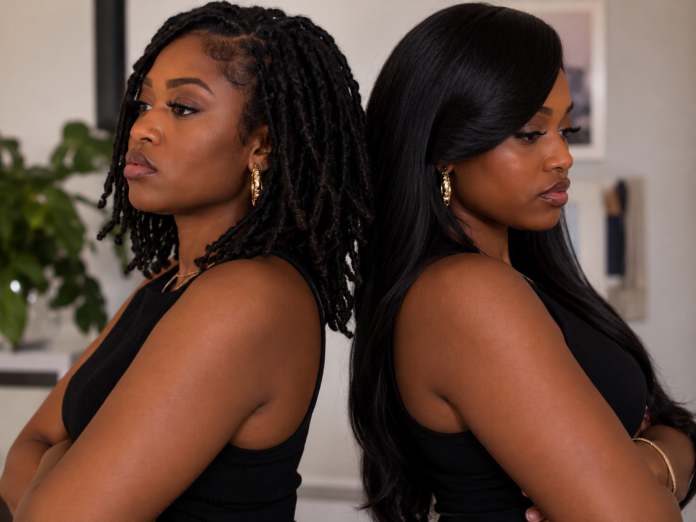
Ending a friendship over text is something I never imagined I’d do, especially when it involved someone who was more like a sister than a friend. It took me a while to sit down and write about this because it’s a little closer to my heart than I realized. She wasn’t just a regular friend. She was my best friend, my sister, and someone I still care deeply about, even after all these years apart.
But that’s the complicated thing about love. Sometimes it’s enough to carry a relationship through the difficult seasons, and other times, loving someone means accepting that you may be better off doing life separately. You can love someone from a distance, genuinely wish them well, and still recognize why the relationship needed to end for both of you to grow in different directions.
I’ve never been particularly good at lingering in relationships where I feel consistently disregarded or where the dynamic no longer feels right. My instinct has always been to create distance, remove myself from the situation, and continue loving and supporting people from afar. It’s not always the most graceful approach, and I’ve certainly learned a thing or two about how I handle conflict over the years. But at the time, walking away felt like the only way I knew how to move forward.
And in this case, walking away meant ending a friendship that had been part of my life for well over a decade. All it took was one text message.
The Friendship That Felt More Like Sisterhood
We met in middle school. I’m not entirely sure when we became attached at the hip, but somewhere between middle school and college, we went from being friends to practically being family. Our families were intertwined, we’d lived together at different points throughout the years, and we were involved in just about every major chapter of each other’s lives.
We also had so much in common. Our personalities were almost identical: stubborn, opinionated, and very much standing on business. We weren’t the type to argue just for the sake of arguing. I said what I said, she said what she said, and that was pretty much that.
We both also had sisters, and if you know what it’s like growing up with sisters close in age, you know that having a best friend is almost optional. Our sisters were already our built-in best friends. So this friendship was something we genuinely chose. We didn’t need each other to fill a void. We simply loved each other and enjoyed doing life together.
But as we got older, I started noticing that our lives were going in very different directions.
I was in a season of questioning everything. My interests, career ambitions, lifestyle, relationships, and just about every belief I’d ever held were up for examination. I wanted to explore ideas, have conversations about possibilities, and challenge the way I viewed the world.
She was more of a realist. She had a strong sense of what she wanted: work, home, church, and building a family of her own. Neither approach was wrong, but I started feeling like certain conversations were becoming harder to have. Sometimes I didn’t feel comfortable sharing my more unconventional thoughts because I knew we’d see things differently.
Our interests were shifting, our priorities were changing, and we were becoming harder to relate to in certain ways.
I still loved her deeply. I just wasn’t sure we were growing in the same direction anymore.
The Text That Ended a Best Friendship
I was somewhere on International Drive in Orlando, Florida, when I got the text.
My best friend was letting me know she wouldn’t be coming to my brother’s 40th birthday party anymore because she was going to the fair with her guy and their children.
Now, you might be thinking, “Come on, Airess. It’s not that serious.”
Hear me out though.
We had been planning this birthday outing for weeks. We were excited about it, had our outfits planned, and genuinely looked forward to spending the evening together. This wasn’t some last-minute invitation she’d casually accepted. It was something we’d both been anticipating.
And now, a day before the party, she was backing out.
But the cancellation itself wasn’t necessarily the issue. It was what the cancellation represented to me.
I had been feeling like she was choosing her relationship over our friendship repeatedly. As their relationship progressed and they welcomed their daughter, I felt like my place in her life became increasingly uncertain.
I didn’t really grasp at the time that becoming a mother changes your priorities. Or, that building a family requires time, attention, and commitment. I wasn’t expecting our friendship to look exactly as it did when we were teenagers but I wasn’t prepared for the extreme shift.
I didn’t expect to feel like I was constantly being moved to the bottom of the priority list.
I was also in my 20s.. Keep this in mind.
There was another layer to my frustration, too. I’d heard her vent about certain things in her relationship, and at the time, I couldn’t make sense of her continued investment in that same relationship.
I wasn’t mature enough then to understand that people can be unhappy with certain aspects of their relationships and still wholeheartedly choose to remain in them. Venting to a friend doesn’t necessarily mean someone wants to leave their partner, nor does it mean they’re asking you to form a permanent opinion of that person.
Looking back, I realize how easily that dynamic can influence the way you view your friend’s partner, especially when you’re emotionally invested in your friend’s happiness.
I had to learn (and I’m still learning) that someone else’s relationship doesn’t have to make sense to me for me to respect their choices.
However, that was far from my perspective at the time.
So when that text came through, something in me snapped. I was tired of feeling like an afterthought, and this felt like one disappointment too many.
I sent her a breakup text. A whole paragraph, actually.
Can you guess her response?
“Ok.”
And that was it.
No argument. No phone call. No attempt to talk things through. Just two letters that effectively closed the door on a friendship that had lasted more than a decade.
Is Ending a Friendship Over Text Ever Okay?
Here’s where I think the conversation gets interesting.
Generally speaking, ending a close, long-term friendship over text isn’t the approach I’d recommend. When you’ve shared years of history, family memories, personal milestones, and countless life experiences, there’s something to be said for having an actual conversation.
A phone call or face-to-face conversation can give both people an opportunity to express themselves, ask questions, and understand what led to the decision.
But I also don’t think there’s one universal rule for ending a friendship.
Some friendships have already reached a point where the conversations have happened repeatedly. Others involve dynamics where direct communication feels emotionally exhausting or even unsafe. And sometimes, a person has made a decision after years of internal conversations that the other person hasn’t been privy to.
The important thing is understanding the difference between communicating a decision and avoiding a difficult conversation.
If you’re considering ending a friendship over text, here are a few things I’d encourage you to consider first:
1. Are you ending the friendship or reacting to a moment of frustration?
There’s a difference between reaching your breaking point after a repeated pattern and making a permanent decision because of one disappointing interaction. Give yourself enough time to understand which one you’re dealing with.
2. Have you communicated how you feel?
Your friend may genuinely have no idea that you’ve been feeling neglected, dismissed, or disconnected. If the friendship is worth preserving and you haven’t expressed those feelings, consider having that conversation first.
3. Are your expectations still realistic for the relationship you’re in?
Friendships evolve. Marriage, parenthood, career changes, relocation, and personal growth can all affect how much time and energy people have for one another. Sometimes the issue isn’t a lack of love. It’s that the friendship hasn’t adjusted to the realities of two changing lives.
4. Are you comfortable with the possibility that there won’t be closure?
A text message doesn’t guarantee a conversation, an apology, or even an acknowledgment of your feelings. Before sending one, consider whether you’re prepared for the other person to respond in a way you didn’t anticipate.
I was not prepared for the “ok” lol. I was fully expecting her to call me dramatic, and the convo would end with us coming to a compromise. But instead… she left me no choice but to stand on what I said.
5. Would you be comfortable with how you communicated your decision years from now?
You don’t have to make someone comfortable with your decision, but you should be able to stand behind how you delivered it. Being hurt doesn’t mean you have to be hurtful.
Ultimately, if you’ve decided a friendship needs to end, you can communicate that clearly and respectfully. You don’t have to turn the ending into a character assassination or provide a detailed list of every disappointment you’ve experienced.
And if you’re in a situation where direct contact doesn’t feel safe, you don’t owe someone an in-person conversation at the expense of your well-being.
The Part of the Friendship I Didn’t Know How to Let Go Of
After our friendship ended, I reached out a few times over the years to wish her daughter a happy birthday.
There’s a part of this story I haven’t mentioned yet.
I remember the day she told me she was pregnant. We were laying on the bed, having one of those conversations that somehow turns into hours of baby talk. When she asked me to be her daughter’s Godmother, I was genuinely excited. I felt honored and immediately said yes.
So even after our friendship ended, I felt a responsibility toward her daughter.
For a few years, I would reach out on her birthday to wish her well. But eventually, something about the arrangement started to feel uncomfortable. I wasn’t on speaking terms with her mother, and although I wanted to maintain a relationship with her daughter, I didn’t really know what that was supposed to look like.
Looking back, I wonder if part of that discomfort came from not knowing what place I still had in their lives.
Maybe I didn’t see the value I could still bring to her daughter’s life, even if her mother and I were no longer friends. Or maybe I just didn’t know how to navigate a relationship that had once been so natural and was now anything but.
I’ve since watched a similar situation unfold. A friend who managed to maintain a beautiful relationship with her Goddaughter despite no longer being friends with the child’s mother.
The little girl genuinely loves her Godmother, and watching their relationship has made me happy. But it has also made me reflect on my own situation.
I wish I had figured out a way to remain a consistent presence in my Goddaughter’s life. She didn’t have anything to do with what happened between her mother and me, and she certainly didn’t deserve to lose a relationship because of it.
I still get to see her from afar and watch her grow into the young woman she’s becoming. And genuinely, it makes me happy to see her thriving.
It’s a reminder that sometimes the relationships connected to a friendship breakup are just as complicated as the friendship itself.
Do I Regret Ending the Friendship?
No.
At the time, I felt relieved.
I was tired of feeling like I was competing for a place in someone’s life, and ending the friendship meant I no longer had to navigate that disappointment.
I don’t necessarily regret choosing distance. And I don’t think I would have been happy continuing a friendship where I consistently felt disregarded.
But would I change anything about how it ended?
Maybe. There’s definitely one thing I’d do differently.
For my Goddaughter, I would have at least started the conversation. I would have asked if we could figure out a way for me to remain a consistent presence in her life, even if her mother and I weren’t able to maintain our friendship.
I can’t say whether that conversation would have gone anywhere, but I wish I had given it a chance.
I also recognize that my approach to conflict back then wasn’t necessarily the healthiest. Creating distance was and still is my default response. Sometimes that’s a necessary boundary. Other times, it’s an opportunity to have a conversation you’re avoiding.
I’ve learned that there’s a difference between protecting your peace and refusing to work through uncomfortable situations. And I think maturity is being able to recognize when each one is necessary.
Can You Still Love Someone You No Longer Have in Your Life?
Absolutely.
I think one of the hardest things about friendship breakups is accepting that the person doesn’t have to become a villain for the relationship to end.
We had years of beautiful memories. We shared experiences that shaped who I am today. She was there for so many chapters of my life, and I was there for hers. None of that disappears simply because we no longer speak.
I don’t know how she remembers our friendship or whether she ever thinks about how things ended. Or if the experience feels entirely different from her perspective.
And that’s okay.
If I could say anything to my ex best friend, it would be this:
I still love you. I hope life has been kind to you, and I hope you’re happy. We may have grown into completely different people with different priorities and different ideas of what life should look like, but that doesn’t erase what we shared. I’ll always appreciate the years we spent being sisters by choice, and I’ll always wish you and your family well.
I don’t think every relationship is meant to last forever, and I don’t think every ending needs to be followed by a reunion.
Sometimes people come into our lives, love us through a particular season, and become part of the history that makes us who we are.
And maybe that’s enough.