

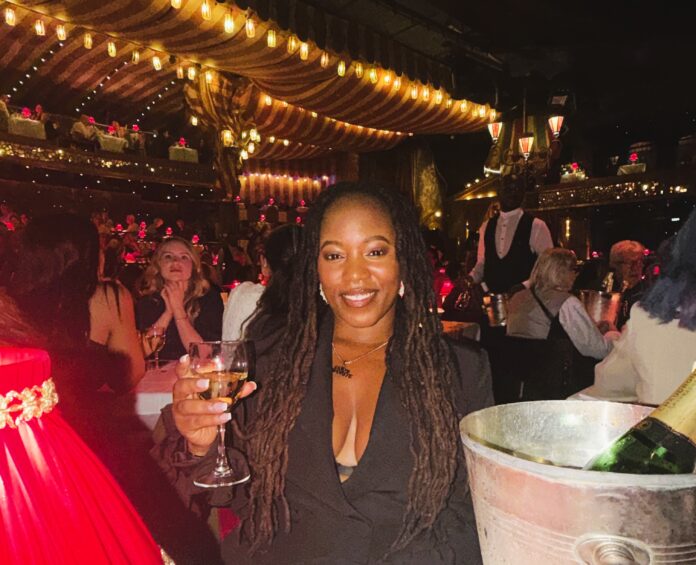
A few weeks ago I posted a reel asking my homeboys why they think I’m single, and I’d like the record to show that I asked for this. The responses were… a lot. I wanted honesty, I got honesty, and now it’s a blog post, because that is what I do with feedback.
Here is the back story. I’ve been intentionally not dating for about a year and a half, and life has been superb. A little lonely at times, yes, but never lonely enough to let anybody disturb my peace. But… every now and then I find myself fully prepared to indulge in the thought of being completely consumed with a person.
So, I did what any logical woman would do, and I surveyed my network on green flags in dating, mostly as a double check on my own list. I wanted to see if there was a difference between how men, women, married, and single people ages 18 and up identify green flags. This post covers what they said, what the numbers do and don’t prove, and the one thing no checklist seems to capture.
Why my homeboys think I’m single (and my official response)
The verdicts:
- Apparently, I don’t appear to care enough.
- Cutting men off for the smallest things is, allegedly, a hobby of mine.
- I move around too much.
- Not making a man feel needed, so a man wouldn’t know where his place is.
- The one decent answer in the whole pile: God’s timing.
Some of that I’ll take as a note. The rest goes in the folder labeled “opinions from people who are not on the date.”
In my defense, I don’t have a defense. These are all things I’ve heard my entire dating life and at this point, I’m settled into the thought and opinion that God’s timing is the only reasonable explanation. I can live comfortably with that.
Why healthy love can feel terrifying when your peace is working just fine
Here is my hot take: Green flags can be scary for the people who aren’t ready to step up to the plate.
If someone is genuinely good, that means YOU have to show up as a good person and a good partner. That means being more on the straight and narrow and a lot less of a heathen.
You might be thinking… “well, duh, we should already be showing up as good people.” Here’s the thing: believing you’re a good person and being a good partner are two different skills. You can feel perfectly kind in your own head while the person across from you is quietly noticing a lot of flaws, and being a good partner means you can hear that and do something with it. That’s where things get tricky, because now somebody is holding up a mirror and you might not like the angle.
A person with plenty of red flags takes the pressure off, because when it goes sideways there’s always a convenient villain.
Green flags remove the excuses
- With red flags, the story writes itself: they were the problem.
- With green flags, the only variable left in the room is you.
- When your peace is already working, a calm, kind, consistent person is a bigger disruption than a messy one, because the messy one was never going to stay long enough to change your routine.
The Hinge girlie and the guy who is almost too unproblematic
I recently talked to a woman who signed up for Hinge and has been going on dates. One guy says all the right things and is almost too unproblematic, and she is not excited about him at all (girl, what?). Her situation is the reason I added one question to the survey: even if all the green flags are there, what would make you lose interest?
What my network said about green flags in dating
Quick note, because accuracy matters: a good share of the hindsight answers come from people who are now married or partnered, so they’re looking back from a good outcome.
The instant green flags
This was a pick-all-that-apply list, so most options got a lot of love. The interesting part is the order, from most picked to least:
- Words match actions (everyone picked this one)
- Communicates openly
- Emotionally available
- Financially responsible
- Makes you feel calm and not anxious
- Secure and not jealous
- Ambitious with clear goals
- Good relationship with family
- Kind to strangers and service workers
- Has close friendships
Consistency won by a mile. Close friendships landed at the bottom, even though one respondent said a long-standing same-sex friend group shows “commitment and the ability to show up as a friend.”
The green flags people only appreciated later
These answers were the most honest part of the survey. A few of my favorites:
- “Moving slow and not rushing.”
- “His boundary setting.”
- “Financially responsible when I wasn’t great with money.”
- “Being emotionally regulated. Showing anger signs early or anger impulses is not cute!”
- A respondent who wrote that men who were upfront about their intentions felt “rushed” at the time, but they “didn’t appreciate this until later on.”
The pattern is that the flags we notice late are the quiet ones: pace, regulation, boundaries, clarity. They don’t announce themselves, and apparently they don’t always feel like a spark either.
What made people lose interest
Here is how the answers ranked:
- There’s no physical chemistry (the clear leader, picked by about half of the people who answered)
- Too passive
- The conversation feels boring
- Doesn’t challenge me intellectually
- Moves too quickly
- Lifestyle doesn’t match mine
Chemistry plus passive, boring, and not challenging all amount to “nothing is happening here,” and together they made up most of the answers. Pace and lifestyle were the rare ones.
Why “too good to be true” makes people cautious
More than half said they stay a little cautious when someone seems too good to be true, a few said it depends on the person, and a few said they typically trust it. Meanwhile most said green flags influence them “a lot” and the rest said “somewhat.” Wanting the good stuff and trusting the good stuff turn out to be two separate skills.
The survey in one sentence
Everybody wants the green flags and nobody wants to be bored by them, which means the real filter is a little something extra that varies from person to person; the part nobody puts on the checklist is that every flag you ask for is one you’ll be held to as well.
What healthy love actually costs
The research on this is more about closeness and risk than about checklists, so here is what I could verify.
The risk of depending on someone
A 2006 review in Psychological Bulletin by Sandra Murray, John Holmes, and Nancy Collins describes what they call a risk regulation system. People in relationships are balancing two competing goals: getting close to a partner and protecting themselves from the pain of rejection. The authors’ central idea is that feeling confident in a partner’s positive regard is what lets people take the risk of depending on that partner and becoming more connected. Read the abstract and citation.
My read, which is interpretation and not their conclusion: a good partner doesn’t remove the risk, they make it worth taking. You still have to go first.
What the price list looks like
This list is my synthesis of the survey and the idea above, so treat it as opinion:
- Being known: a steady person notices the small details, and that is a lot harder to hide from than drama.
- Losing the villain: when it goes sideways, you can’t point at the red flag.
- Matching the standard: the flags you want in a partner become the flags you’re graded on.
- Going first on trust: confidence in someone’s care has to start somewhere, and sometimes that somewhere is you.
- Giving up the quiet: your peace now has a second person in it.
What the return looks like
For balance, here is the other side of the ledger. A meta-analysis by Robles and colleagues in Psychological Bulletin (2014), which a companion review by Robles describes as covering 50 years of research, found small but consistent associations between better marital quality and better health. Robles argues the size of the effect is practically meaningful. Two caveats apply: the research is on marriage and not on dating, and the mechanisms behind the link haven’t been proven causal. Read Robles’s review.
So the honest cost-benefit read is that healthy love asks you to take a real risk, and the evidence on what a good relationship returns is encouraging but modest in size.
Edge isn’t a red flag (but it can read as one)
I think we all want someone with a little edge. Edge doesn’t automatically mean red flag. Here is my working distinction, which is opinion and not research:
Edge looks like
- Makes you laugh uncontrollably
- Confident without being cocky
- Genuinely curious about you
- Disagrees with you and stays warm
A red flag looks like
- Anger signs early on (one respondent said it plainly: “not cute”)
- Words that don’t match actions
- Rushing, pushing, or stringing you along
How to take a calculated risk on a green flag person
- Write down your “something extra” before the date. If you can’t name it, you can’t tell whether it’s missing or just hasn’t shown up yet. But also leave a little room for surprises.
- Separate bored from unfamiliar. Calm can feel flat when you’re used to adrenaline, so give it a beat before you rule on it.
- Give it a third date. That’s a rule of mine and I can’t cite a study for it, so use it or toss it.
- Go first on one small piece of trust. Share something real and low-stakes, then watch what they do with it.
- Say the quiet part out loud. If you want more banter, more edge, or more initiative, tell them early; that’s information, not criticism.
- Keep the mitigation plan. A calculated risk still allows an exit; it just requires you to actually go on the date first.
No one is interested in a person with a list of green flags and no personality
And I’m also not interested in a walking red flag. What you’re after is someone who passes the checklist, makes you a little curious about what they’ll say next, and is worth the risk of letting your peace get company.
If you took the survey, thank you. If you didn’t, tell me in the comments: what’s your something extra?