


Lisa Cade is a friend of mine who, not long ago, lived through the unthinkable. You might remember her from my 2021 post, “From the Classroom to Wall Street ft. Lisa G.” Well… Lisa G. is Lisa C. now, and she has changed far more than her last name. In a two-year span, she became a wife, then a mother to twin boys Zayne and Zylo, then a mother carrying a loss no mother should ever have to hold.
Her sweet baby boy Zayne passed away. And what followed his passing was a grief she didn’t see coming… the slow, painful shift in her friendships.
After reading a recent post of mine, “Friendships that Fade: The Guide to Letting Misaligned People Go,” it triggered something she needed to say. So, 1 phone call and 2 hours later, I transcribed her heart-felt thought stream about grief and friendship into something that I pray will help her carry the load.
As you might have expected, grief remade Lisa; the woman I’ve known for almost a decade now, suddenly transformed, and visibly, energetically, she is not who she was.
What follows is mostly her, unapologetically, in her own words, with me stepping in only to hold the thread and add a little of what I’ve learned from Lisa about why grief does what it does. If you have loved someone and lost them, and then watched your friendships shift under the weight of it, this one is for you.

The friends who went quiet
The surprise for Lisa wasn’t always the people who said the wrong thing. It was the ones who said nothing at all.
“People grieve with you on their own timeline, not yours. The quiet is what got me. My friends would talk about me, without actually talking to me.
One of our closest friends took a month to respond to a very emotional text message we sent him. We knew the message was received because he reached out to a mutual friend and expressed that he didn’t know what to say…
It’s fine that you don’t know what to say. Nobody does.
But after a month, silence stops being about not knowing the words, and turns into a decision to not sit in the discomfort of communicating with us in this season.
Some of my friends would see me post one thing on Instagram and decide I must be doing fine. I was not fine.
A best friend dropped off food and thought that was good enough… and yes, a meal can be love, but not when it’s a way to check a box and then disappear.
My blood sister called me 2 or 3 times, but I couldn’t pick up because it was all still so fresh. My son had just died and there was so much going on around me. Then the calls just stopped and it felt like she gave up on me. It’s extremely hurtful and I don’t think there’s any coming back from that.
A sorority sister I considered close sent me a one-liner over text and never picked up the phone again.
Another friend used my son. He took what happened to Zayne and made it into something for himself, something that never really sat right with me. That’s a different kind of hurt. In addition to his absence, he was using my baby’s name for a reason that had nothing to do with loving him.”
-Lisa
Every friendship changed, and not all of them survived
Grief doesn’t leave a single relationship where it found it. It goes through all of them.
“Every single friendship changed. Some got deeper; a few didn’t make it. A friend I’ve had for half my life still doesn’t know how to be near me now, and part of me hopes she gets there… but I’m not going to hand her the blueprint. I’m too tired to teach people how to love me through this.
I don’t have the tolerance for that anymore. This season, I come first. My feelings come first.
Another friend completely checked out of all the normal things we used to do, right when normal was the only thing I wanted.
And I get it… I know I’m a different person than I was. I’m sadder. I have dark humor. And I can’t bring the same excitement into a room. Some friendships were built on that excitement. So… as I’m changing, those friendships are changing and it’s not the best feeling.”
-Lisa
Watching a friendship transform under grief is its own strange thing, and Lisa is not imagining it. Loss reliably reshapes the people around us; some bonds deepen into something more honest, and some quietly come apart. Both were happening to her at once.
Her husband was carrying his own version of this, feeling isolated from his friend group the same way; even the people who had known deep loss themselves somehow still could not show up. That was the part that shocked her most. The ones who should have understood were sometimes the furthest away.
The isolation no one warns you about
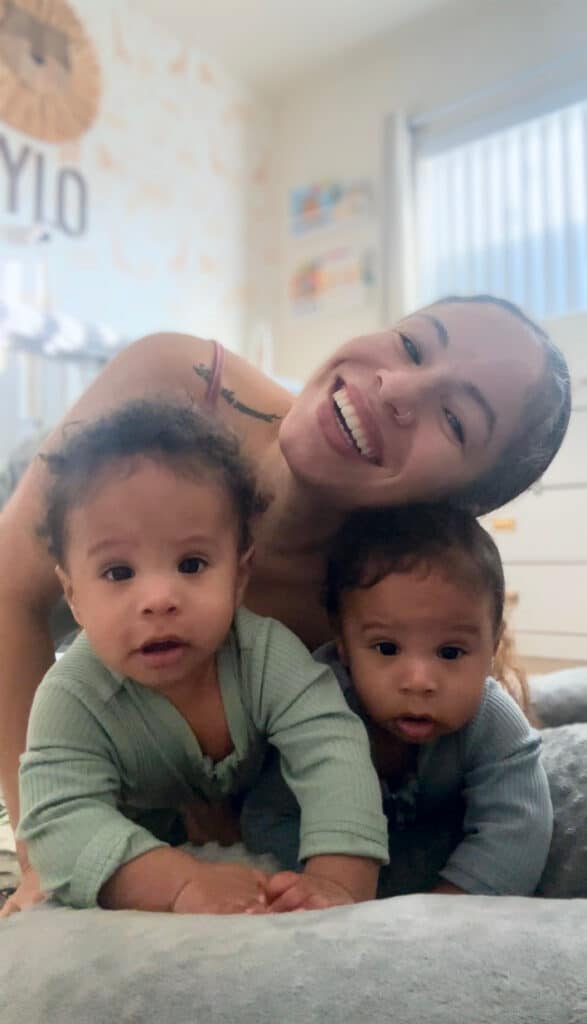
I’ve learned from Lisa that sometimes grief can convince you that you don’t deserve closeness, that you’ve become too heavy to be held, and it reached into her friendships and her marriage at the same time.
The neuroscience underneath some of what Lisa was experiencing is the brain responding to the loss of a loved one through some of the same reward and attachment circuitry involved in love and longing; the very wiring that makes us reach for the people we’re bonded to. For a grieving mother, that can make love feel complicated in ways that are difficult to explain to someone who hasn’t experienced this kind of loss. The love doesn’t disappear; it just has nowhere to land.
Grieving as a Form of Learning: Insights from Neuroscience Applied to Grief and Loss – PMC
There is a specific loneliness that lives inside this kind of loss.
One of the deepest cuts came from a friend who tried to relate to what Lisa, and her husband were carrying by holding it up against an ordinary struggle of his own. The intent may have been connection; but the effect was erasure. And not only erasure, but a strain that an already grieving husband and wife should never have had to absorb.
Lisa and her husband were grieving their child. Nothing about losing Zayne was remotely comparable.
It was that moment where she realized that even the people she welcomed into her home could look at the loss of her son and reach for something small to set beside it.
Lisa wasn’t navigating an ordinary shift in a relationship. She was trying to figure out how to be close to anyone while carrying a love and a loss that had fundamentally changed her.
Say his name
“People are scared to say Zayne’s name, like it might break me. What breaks me is the silence around him. When no one says his name, it starts to feel like he was never here at all, and he was here. He is here.
I don’t need anyone to walk me back through the day my child died; that is not what I’m asking.
You can still say his name. You can still bring him up. There are days I would trade places with him without a second thought, so the very least the people around me can do is let him exist in a sentence.”
-Lisa
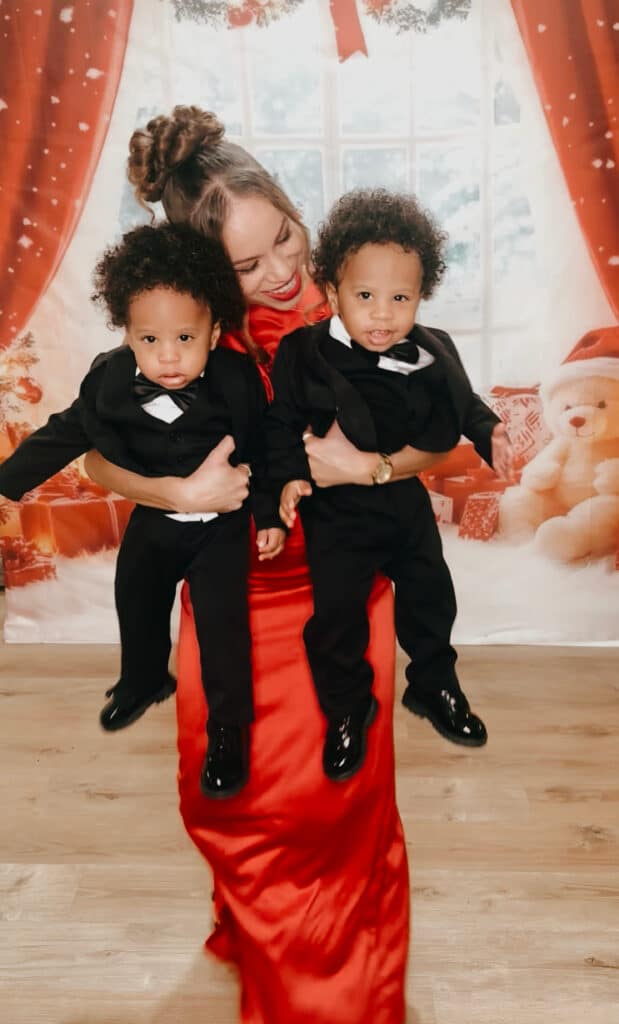
What hurts a grieving mother, and what actually helps
If you take one practical thing from Lisa about grief and friendship, let it be this section. She was clear about the difference.
The things that hurt
“There’s a kind of grief gaslighting people don’t even realize they’re doing. Saying things like, “Everything happens for a reason” or “God needed another angel”. They think it’s comfort; but it lands like a slap. Things like, “I’m thinking of you” or “I’m praying for you” lands so much softer than any kind of justification or reasoning for what I’m going through.”
The things that help
“I can’t imagine” is so much better than “I can imagine”, because you can’t, and pretending you can shrinks how big this is. “I’m sorry” is enough. “I don’t know how you feel, but I’m here” is enough, because it tells me the worst thing really did happen and you’re not going to look away from it. And please understand this is not the same as losing a parent or a grandparent; it isn’t a step in the natural order; it’s more like a tear right through it.”
-Lisa
Lisa told me that the friends who got it right, did almost nothing elaborate. They listened. They sat with her. They managed their own discomfort without making it Lisa’s problem; making her the priority. Some were her bridesmaids, some were near-strangers, some were other mothers she only knew through a screen. What hurt most was absence. What helped most was presence, along with prayers that were said beside her, and the simple grace of someone taking initiative so she didn’t have to.
Grief is love with nowhere to go
Lisa carries a line with her that helps her make sense of what she feels. It comes from the writer Jamie Anderson.
“Grief is love with nowhere to go. That is the only thing that has ever made sense to me. All this love I have for my son, and no way to give it to him… it has to go somewhere, so it sits in my chest and behind my eyes. People will say all kinds of things to make it smaller. But this is about my kid, and it feels like people think I lost a puppy. It is not that. It will never be that.”
-Lisa
The body keeps the grief
“There are nights I howl. I call his name out into the dark. I cry alone more than anyone knows, and what I want in those moments, is for a friend to just listen while I do it and not try to fix anything.”
-Lisa
Researchers who study crying have found that a deep cry can help bring you back to a more emotional and physiological baseline, potentially through the parasympathetic nervous system. The part of the nervous system involved in rest and recovery. This effect is strongest when someone is there to comfort you. Lisa’s tears are doing exactly what they were built to do and as friends of grieving mothers, simply being present in those moments do so much more than trying to help her avoid those moments.
Joy lives here too
This is the part people least expect from her.
“I still feel real joy. If anything, I’m more grateful now, more awake to what’s good. My dark humor and sudden breakdowns are a part of how I survive.
But what I can’t stand is comparison. When people measure their lives against mine.
I had a friend compare what she didn’t have with what I do have in what feels like an attempt to minimize my grief. I want to ask them… are you celebrating me, or are you evaluating yourself through me? I lost a child. Nobody needs to be embarrassed of their life in front of me.”
-Lisa
Joy and grief are not taking turns here; they live in the same body at the same time. Lisa can be grateful for what remains and devastated by what is gone. Her joy doesn’t make her grief smaller, just as her grief doesn’t make her joy less real.
Grief and Friendship: What I need my friends to know
Lisa, undiluted.
“If you love someone who is grieving a child, here is what I need you to know. I am never going to be the woman I was, so our friendship can’t be what it was either, and that is not all bad. It can go deeper. It can mean more. Continue to have patience and compassion, because even when I’m smiling there is sadness right underneath.
I still want to feel normal. And understand that anything I manage to give you right now is quality; whatever I show up with, I mean it completely. I honestly cherish the ones who are present even more.”
-Lisa
To the mother reading this
If you are the mother she’s describing, Lisa is speaking to you directly.
“You can have the most incredible support system in the world and still feel abandoned, because no one else feels what you feel or thinks what you think. At some point, as much as it hurts, you have to pull yourself up; no one can do the internal work for you.
Life handed us something we have to carry, and we cannot be codependent on other people to carry it for us.
When your friends do show up, let it be a bonus and not the whole foundation.
When I feel most abandoned, I go to scripture, and I gain a sense of peace in me that people can’t give and can’t take away. It’s a daily practice; you build the muscle over time. My friends have gone quiet on me, but God never has. That is what I hold when there is nothing else to hold.”
-Lisa
That’s Lisa. That’s Zayne’s mom. If her words found something tender in you, sit with it. And if you’ve ever loved someone through grief, let her words remind you that sometimes the most meaningful thing we can offer is simply the grace to stay.
If you are grieving the loss of a child, The Compassionate Friends (compassionatefriends.org) offers support for bereaved parents, siblings, and grandparents.